Cataclysmic Evolution
Catastrophic High-Energy Timeline Biology

In our previous investigations, we have seen that the physical evidence—the mountains, the strata, and the drowned shelves—points to a timeline far more compressed and violent than we are traditionally taught. If the rocks and mountains were formed in rapid, high-energy pulses, then let’s consider the biological story.
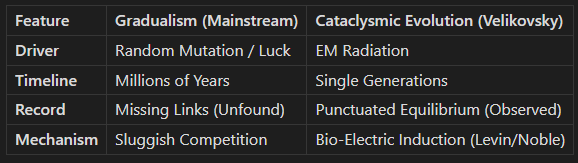
Mainstream biology is built on a low-energy premise: the idea that life changes through the slow, accidental accumulation of random genetic errors over millions of years. This idea has become the unquestioned foundation of our origins.
But if the Earth’s history is actually a compressed series of high-energy discharges, this popular understanding is mechanically impossible. There simply isn’t enough time for “luck” to build the world we see. The forensics suggest a different mechanism, first championed by Immanuel Velikovsky: Cataclysmic Evolution.
The Uniformity Trap
We have been conditioned to believe in a slow geology—watching waves wear away cliffs particle-by-particle.
However, evidence suggests that during global upheavals, the Earth is not just physically shaken; it is radiatively transformed.
The “Missing Link” Problem
Darwin was haunted by the “defective” fossil record—the fact that intermediate links between species are almost always missing. He assumed they existed but hadn’t been found.
The Patterns of Gould: In the 1970s, paleontologist Stephen Jay Gould challenged this with Punctuated Equilibrium. He argued that the fossil record isn’t “broken”; it is telling us that species remain stable for long periods and then change suddenly.
The Missing Mechanism: While Gould recognized the staccato pattern of life, he lacked a physical “trigger” for such rapid change. Velikovsky’s model provides the missing piece: the change is multiple and sudden because it is forced by the environment.
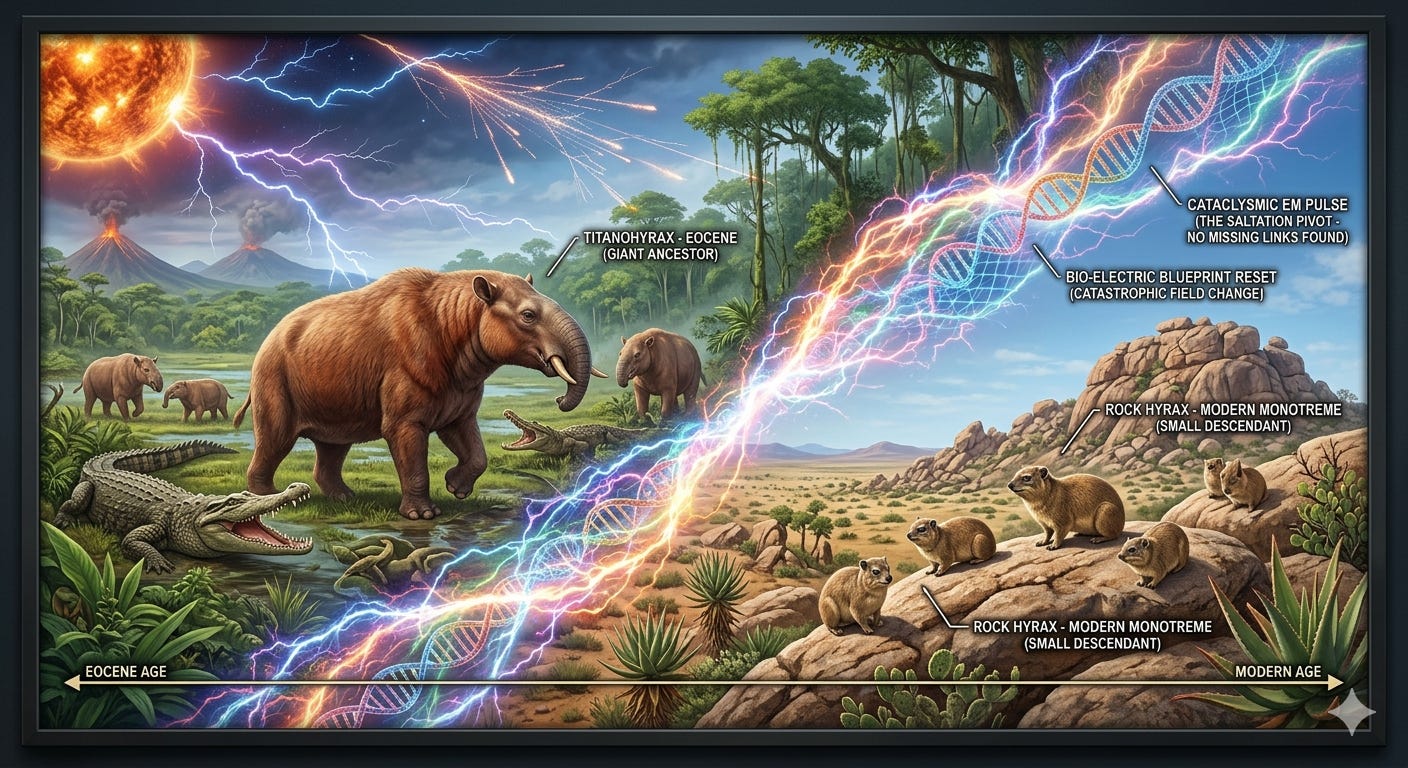
AI generated image of transition from Titanohyrax to Rock Hyrax
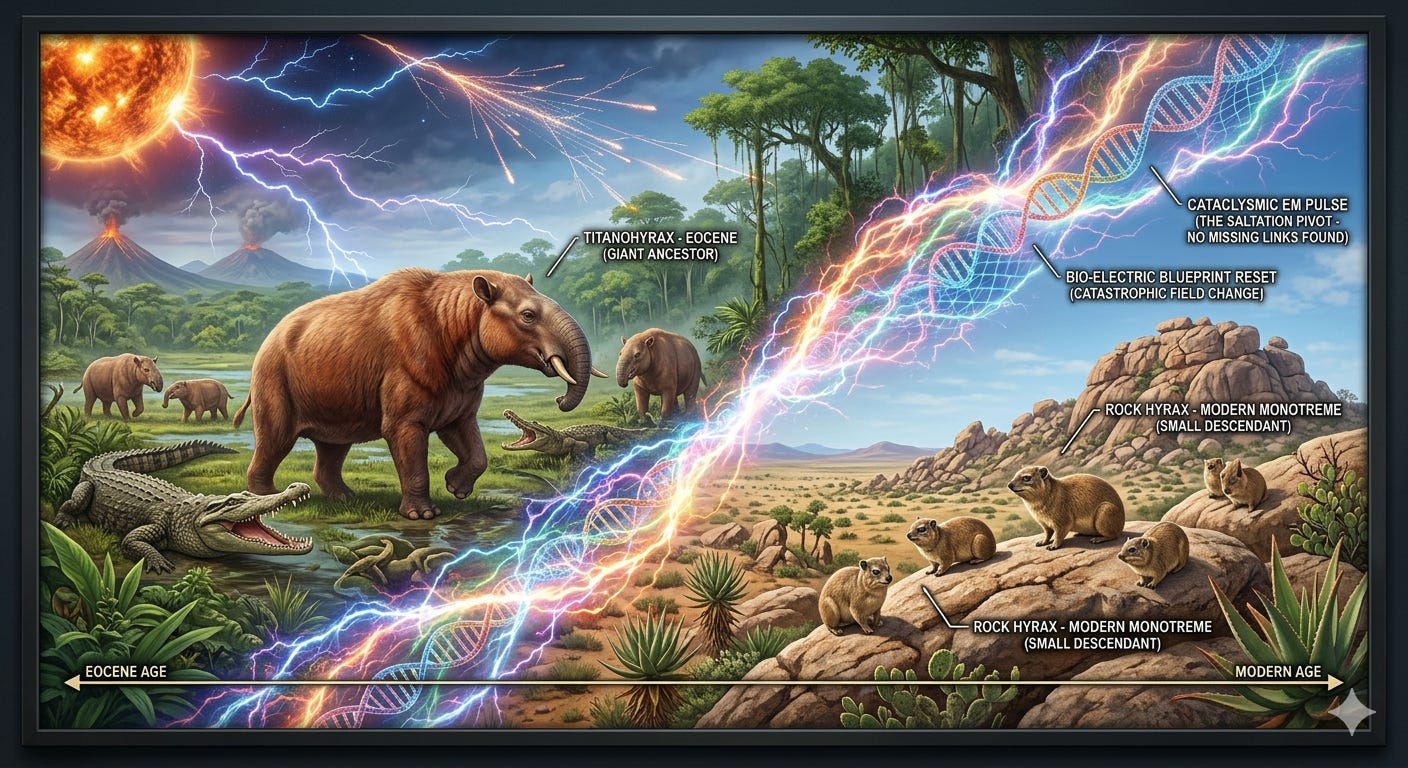
The Bio-Electric Blueprint: Levin and Noble
To understand how life leaps, we have to stop looking at DNA as a rigid “instruction manual” and start seeing it as a hardware interface.
Michael Levin (The Electric Architect): Levin’s work at Tufts University has demonstrated that DNA does not determine the shape of an organism; bio-electric fields do. By manipulating the electrical gradients in a flatworm, he can trigger it to grow an entirely different species’ head without changing its DNA.
Dennis Noble (The Genome as an Organ): Noble argues that the genome is an organ that the cell “plays”. It responds to external stresses, choosing which “tunes” (genes) to play.
Synthesis: The “Software” Reset
By combining these ideas, we can refine the Cataclysmic Evolution model:
The Hardware (DNA): Remains relatively stable but contains thousands of latent blueprints.
The Software (Bio-Electricity): Guided by the Earth’s ambient electromagnetic environment.
The Trigger (Catastrophe): Radiation or Electromagnetism acts as a massive System Reset. It changes the bio-electric software and the cell plays a different genetic tune.
The Result: A sudden, population-wide shift in form (Saltation) that appears in the fossil record as a new species with no missing links.
Conclusion
Darwin built a theory for a world that stays still. The forensics of the drowned shelves and the scorched mountains reveal a history of sudden, violent change.
As Velikovsky noted, Natural Selection does not create species; it merely weeds out those that cannot survive the new age. Life reconfigures when the planetary environment changes.
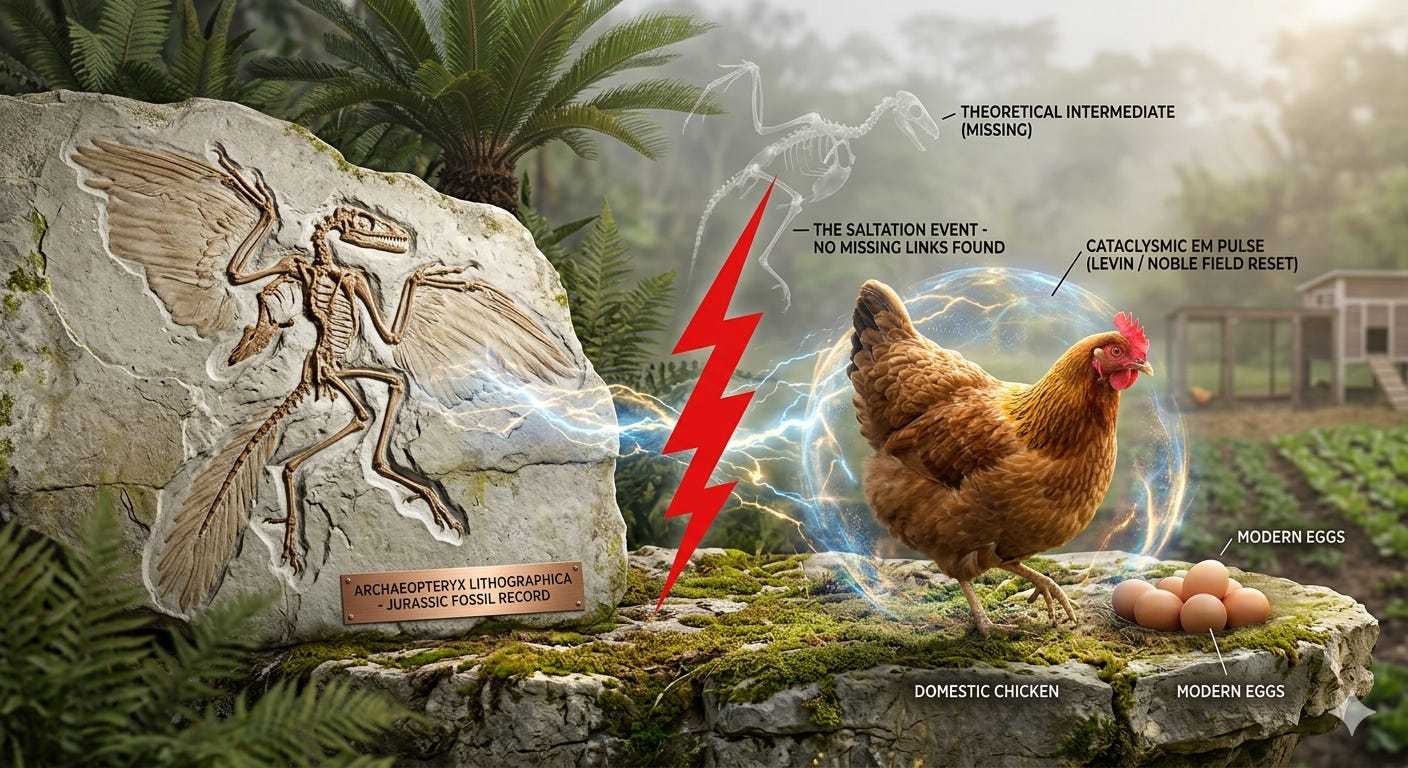
Yet again, the truth is stranger than fiction. Gradualism has had its day.